Stargazing Along the River Corridor: Experiencing Utah’s Protected Night Skies
Embracing the Quiet Wonder of Desert Nightfall
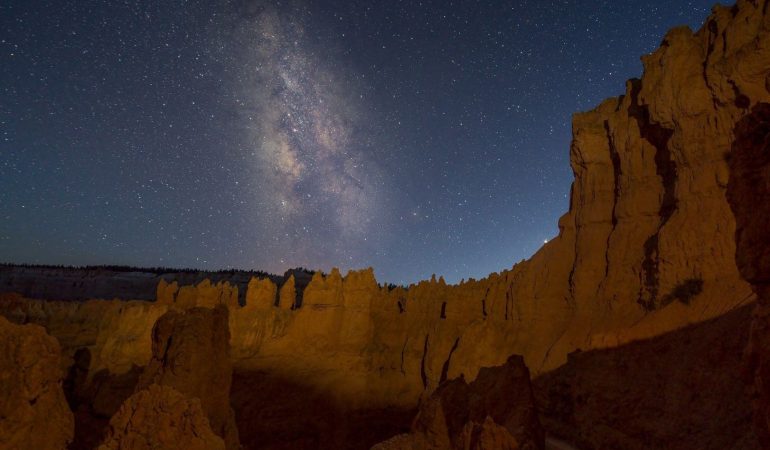
As daylight fades across Southern Utah, sandstone valleys move through a remarkable sequence of color. Rose and amber cliffs soften into violet, the last light lingers along a canyon rim, and the river becomes a dark, reflective thread beneath the widening sky. For affluent travelers seeking a restful escape, this transition offers something more lasting than a scenic view. It creates a gradual separation from schedules, traffic, and artificial brightness, allowing attention to settle on the landscape and the stars above it.
A riverside retreat provides an especially comfortable setting for that experience. After a day of scenic drives, hiking, fishing, or exploring nearby national parks, you can return to a quiet terrace or streamside viewpoint without sacrificing the comforts of a well-appointed stay. The river corridor supplies cool evening air, while surrounding canyon country limits distant illumination. Under protected skies, the night becomes an immersive observatory, shaped by natural darkness, quiet water, and the steady rhythm of the desert.
Why Canyons and River Corridors Offer Superior Stargazing
River corridors can create a more comfortable nighttime environment than exposed desert surfaces. During the day, bare rock and sandy ground absorb substantial solar heat. Once the sun drops, flowing water and moist riparian vegetation generally cool more quickly than the surrounding stone and soil. That cooling can make a canyon-bottom evening feel noticeably fresher, particularly after a warm afternoon, while the movement of air along the water helps disperse some of the heat held by the landscape.
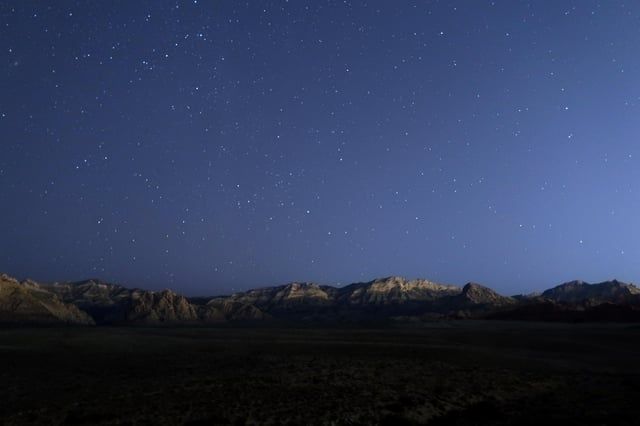
Steep canyon walls add a second advantage by acting as a physical screen. They cannot remove light pollution from the atmosphere, but they can block direct lines of sight toward distant communities, highways, or developed areas. The result is a more sheltered visual field, especially when viewing from a bend in the river or beneath a high sandstone escarpment. In remote parts of the Colorado Plateau, the distance from major urban centers is even more important. The National Park Service notes that Arches National Park retains exceptionally dark skies and became an official International Dark Sky Park in 2019, a designation that reflects the value of limiting artificial light.
As the ground cools after sunset, the atmosphere near the canyon floor can also become calmer. Reduced daytime turbulence means less heat shimmer and fewer distortions across the lower horizon. That does not guarantee perfect conditions, since clouds, smoke, wind, humidity, and dust still matter, but a clear night beside a river can feel unusually crisp. These local benefits belong to a much broader conservation effort. Deep canyon bottoms naturally complement the broader conservation efforts of the dark-sky movement to preserve unpolluted nightscapes.
- Choose a sheltered viewpoint: A river terrace, canyon bend, or protected overlook can reduce wind and block nearby sources of glare.
- Allow your eyes time to adjust: Even an excellent location will appear less impressive if bright screens or vehicle headlights remain in use.
- Check conditions before setting out: Cloud cover, smoke, moonlight, and seasonal storms can change the experience from one evening to the next.
- Respect protected landscapes: Stay on established paths, keep noise low, and avoid adding unnecessary light to a naturally dark environment.
Seasonal Constellations Along Southern Utah Waterways
Every season changes the character of a Southern Utah night. Summer often offers the most immediately dramatic experience because the bright central region of the Milky Way rises prominently above the southern horizon. On a moonless evening, the dense star fields, dark dust lanes, and subtle glow of the galactic core can become visible without a telescope. Late summer also rewards patient observers with broad views of Sagittarius, Scorpius, and the summer triangle, while binoculars can reveal clusters and star clouds that remain invisible to the unaided eye.
Winter brings a different kind of clarity. The air is often colder and, when conditions are dry and calm, exceptionally transparent. Orion becomes the season”s centerpiece, accompanied by Taurus, Gemini, Canis Major, and the bright star Sirius. Spring and autumn are useful transitional seasons for travelers who prefer moderate daytime temperatures and changing celestial targets. Organized programming can add context to an otherwise self-guided evening. Stargazers seeking telescope tours, astrophotography instruction, or ranger-led interpretation can consult the Great Basin Astronomy Festival, a multi-day National Park Service program featuring observation, astronomy education, photography, and family activities.
| Season | Optimal months | Notable targets | Recommended observing hours |
|---|---|---|---|
| Spring | March through May | Leo, Virgo, the Big Dipper, and increasingly late-rising Milky Way features | After full darkness, with later hours offering more summer targets |
| Summer | June through August | Milky Way core, Sagittarius, Scorpius, the summer triangle, and star clusters | Approximately 10 p.m. through the early morning, depending on date and latitude |
| Autumn | September through November | Andromeda Galaxy, Pegasus, Cassiopeia, and the final prominent summer constellations | After 8 p.m., with the best targets shifting earlier as the season advances |
| Winter | December through February | Orion, Taurus, Gemini, Sirius, and the Pleiades | From early evening onward, provided the sky is clear and safe conditions prevail |
Etiquette and Best Practices for Preserving Night Vision
Dark adaptation is both a biological process and a shared courtesy. The eyes rely on light-sensitive chemicals, including rhodopsin, to improve sensitivity in low-light conditions. After exposure to a bright lamp or phone screen, that adaptation begins again. Full adjustment commonly takes approximately 20 to 30 minutes, although the exact experience varies with age, brightness, and individual vision. This is why a sky that initially appears ordinary can become richer and more detailed after a quiet period in darkness.
A few simple habits protect the experience for everyone using a terrace, riverbank, or shared viewing area. Use the lowest practical illumination, cover bright device screens, and shield any light so it points toward the ground rather than across the canyon. Red light is generally preferred because it is less disruptive to night vision than white or blue light, although an overly bright red lamp can still be intrusive. A red filter or a dimmable headlamp is useful, but a phone should not be treated as a harmless flashlight simply because its screen has been set to a warm color.
- Arrive before full darkness when possible, so paths, steps, and obstacles can be identified safely.
- Turn off exterior lights that are not essential and keep vehicle headlights away from active viewing areas.
- Give your eyes 20 to 30 minutes to adapt before judging the quality of the sky.
- Use dim red illumination for maps, equipment, and footing, then switch it off while observing.
- Keep conversations quiet and avoid music near shared decks or streamside locations.
- Secure food, pack out waste, and remain aware of wildlife moving through the corridor.
The Nocturnal Rhythm of Desert Riparian Corridors
The river does more than frame the view of the stars. It supports a narrow band of life in an otherwise arid environment, and that life changes character after sunset. Willows and other riparian plants provide cover and forage, while pools and intermittent springs offer essential moisture for amphibians and other species. At Natural Bridges National Monument, the National Park Service explains that many animals are difficult to see because they are nocturnal, inactive during daylight, or wary of people. Temperature strongly influences this pattern, with many species becoming active at night or during the cooler hours of dawn and dusk.
A quiet riverside evening may include the distant call of a canyon toad, the sudden flight of a nighthawk, or the rustle of a desert cottontail near vegetation. Not every sound can be identified immediately, and that uncertainty is part of the appeal. The corridor is functioning around you, even when most animals remain hidden. Observers should resist the temptation to approach movement or use bright lights to locate it. Wildlife viewing is safest and most respectful when animals are allowed to choose their distance.
- Watch from established areas: Avoid trampling streamside plants or entering sensitive habitat for a better photograph.
- Keep food secured: Odors can attract animals and alter their natural behavior.
- Never handle wildlife: Even small animals can bite, carry disease, or react defensively.
- Use quiet observation: Lower voices and limited movement reveal more of the natural soundscape.
- Leave no trace: Remove trash and avoid disturbing rocks, nests, burrows, pools, and vegetation.
Plan Your Own Riverside Evening Under the Stars
The most restorative stargazing itinerary does not need to be complicated. Select lodging with a genuinely dark outdoor area, arrange daytime activities that leave room for an unhurried evening, and confirm that the route back to the property is safe after sunset. A riverside base can make the experience especially easy, combining cool air, natural sound, and access to comfortable seating with the privacy needed for sustained observation. For couples, the setting offers a peaceful alternative to a busy evening schedule. For families, it turns astronomy into a gentle activity that can begin with identifying the Moon and brightest planets before moving toward constellations.
For the darkest conditions, plan around the new moon, while remembering that moonlight can be useful when navigating unfamiliar terrain and appreciating canyon walls. Seasonal weather deserves equal attention. Summer may provide spectacular Milky Way views but can bring monsoon clouds, while winter offers crisp transparency alongside cold temperatures and shorter daylight. Check current weather, smoke, road access, and park guidance before departure, pack warm layers even for desert trips, and allow extra time for your eyes and mind to settle. Then step outside beside the water, let the canyon absorb the last traces of daylight, and experience Southern Utah”s timeless nocturnal landscape at its natural pace.